Who it’s for
Solo and small-firm lawyers in the US bill by the hour, but on average only about 2.9 hours of an 8-hour day make it onto the bill. The rest is real work that never gets written down. Most of them run their practice on Clio.
What needed to change
Rebuilding the day from memory at night loses hours, and the deadlines promised on calls live only in someone’s head. Lawyers needed to capture work in seconds, even from the parking lot, and no AI could be allowed to file anything they hadn’t approved.
What we built
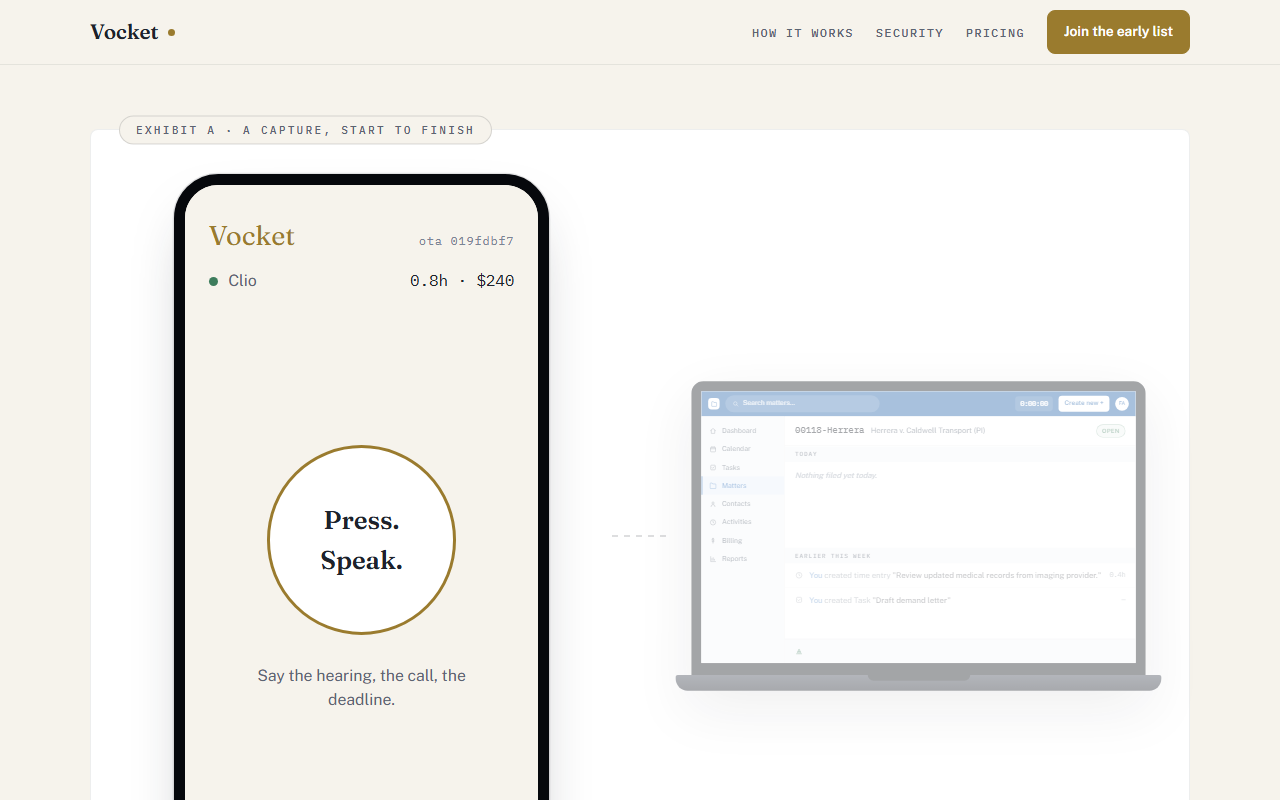
How it works, step by step
- [01]
Press and speak
- [02]
Speech becomes text, tuned to the lawyer’s own matters
- [03]
AI proposes entries and turns unclear items into questions
- [04]
The lawyer reviews and confirms
- [05]
Each item is filed to Clio exactly once
Results so far
AI cost per capture
from speaking to proposed entries
end-to-end checks against real Clio
Decisions that mattered
- [01]A niche over a general assistant: solo lawyers were chosen after scoring nine professions.
- [02]Accuracy came first. The stronger AI model won because a wrong date is unacceptable in a deadline product, and prompt caching brought the cost back down.
- [03]Built as a filing tool: the lawyer confirms everything, and only their own voice is captured.
The technology
For anyone curious about the tools. You don’t need to know any of this to work with us.